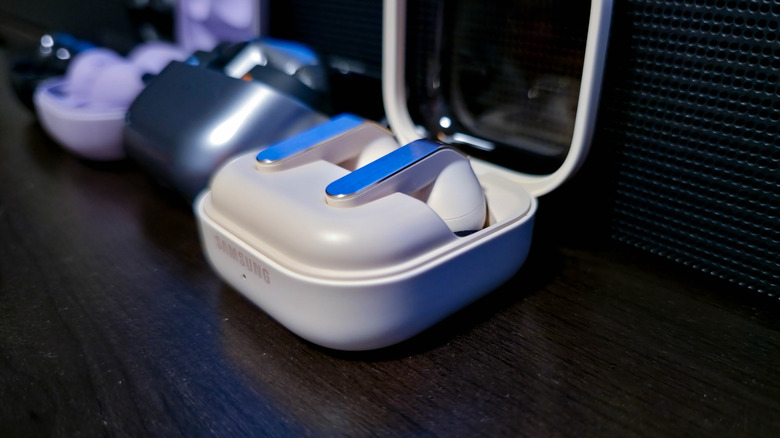
The frustrating science of keeping your ears from doing their job.
Active noise canceling headphones and earbuds have skyrocketed in popularity over the past couple of decades, spreading from a niche product popular among frequent fliers to a nearly ubiquitous technology. Whether we’re talking about Apple’s ubiquitous AirPods Pro or premium consumer headphones from brands like Sony and Bose, it seems like there’s one thing upon which we can all agree in these divisive times: the world around us is way too noisy and we’d rather not hear it.
But if you’ve spent time looking at the best noise-canceling headphones, you’ve likely come across a puzzling distinction between passive and active sound attenuation. At a basic level, the difference between the two is that active noise canceling (ANC) headphones use a computer algorithm to prevent you from hearing outside noises, while passive noise canceling uses physical objects. But the human ear is a remarkably sensitive instrument, and keeping it from doing its job isn’t easy. The limitations of both attenuation types are large enough that the two work best when deployed in tandem.
But the details of these technologies get far more interesting. To function, active noise canceling uses the polarity of sound to create something called anti-noise, which physically destroys sound before it can reach your eardrum. And passive noise canceling is so core to the way most playback devices operate that allowing ambient noise through requires additional engineering work. Here’s what you need to know about both forms of noise canceling.
Passive noise canceling means physically blocking your ears

Passive noise cancellation is the easiest kind of attenuation to understand. It simply means using physical objects to block noise from reaching your ears. When you put your hands over your ears, that’s passive noise canceling. Ditto for wearing earmuffs or earplugs. In the context of headphones and earbuds, passive noise cancellation is what happens when you put on your headphones without even turning them on.
Almost every pair of earbuds or headphones has passive noise canceling by definition, because you either cover your ears in the case of headphones or fill your ear canal in the case of earbuds. Wearable audio playback devices which do not passively isolate the listener are rare, and are specifically designed for that functionality. For instance, many musicians and audiophiles seek out open-back headphones, which have porous earcups to allow for a more natural sound in a studio or Hi-Fi listening setting. Lately, open-ear earbuds have also seen a rise in popularity among outdoor sports and fitness enthusiasts. Typified by products like the Shokz OpenDots 2, these often clip onto the outside of the ear and fire sound into it while leaving the canal unblocked so that workers can hear someone talking to them, or so that joggers and cyclists can navigate urban environments without being pancaked by a passing SUV.
Crucially, passive and active noise cancellation work hand-in-hand. Active noise cancelling headphones often require the listener to ensure that the earcup pads are forming a passive noise canceling seal around their ears. Some people who wear glasses will find that certain active noise canceling headphones don’t work as well for them because the arms of their glasses prevent the formation of a passive seal around the ears.
Active noise canceling creates anti-noise to prevent you from hearing sound
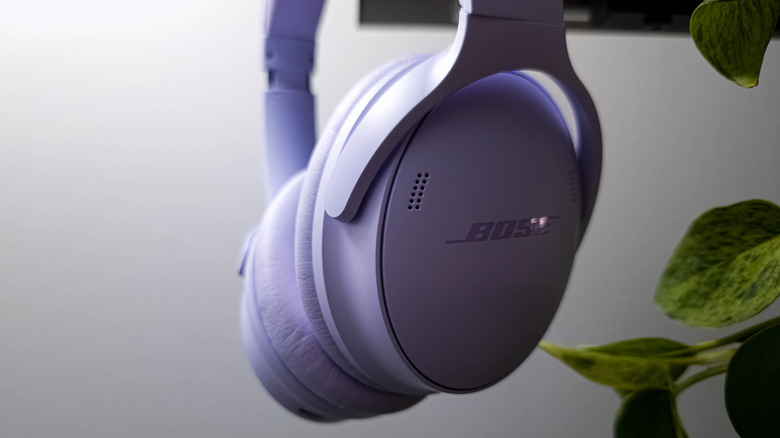
With active noise cancellation, or ANC, your earbuds or headphones are equipped with a small, onboard computer that uses an algorithm to cancel out noise. The terminology is crucial. Whereas passive noise cancellation physically blocks sound, ANC actually does cancel it. Microphones on the exterior of the playback device analyze a wearer’s ambient environment. The computer then creates something called anti-noise, essentially an out-of-phase version of the sound from outside. It’s like adding a negative number to the positive of that number and getting zero. When the noise from outside mixes with the anti-noise, they physically cancel each other out, destroying the ambient noise before it hits your eardrums.
But ANC has severe limitations as of this writing. To create the correct anti-noise, your ANC headphones must accurately capture the original noise. Many companies have solved for this by throwing an increasing number of microphones at the problem. The Sony WH-1000XM6 headphones released earlier this year have a 12-microphone array. But even so, these pinhole mics are limited. Moreover, the ANC processor will always be on a delay, reacting to noise rather than being in sync with it. That’s why ANC works better when attenuating constant, low-frequency noises like an air conditioner, and why you can still hear things like cafe chatter.
Because of those limitations, passive noise canceling is the first line of defense for ANC headphones. The more noise you can physically block out of a listener’s ears, the less noise you need to run through an ANC processor. That’s why even the best noise-canceling earbuds can’t attenuate at the same level as competing over-ear headphones — sticking something inside your ear doesn’t passively block as much sound as covering them entirely.
Credit: Source link