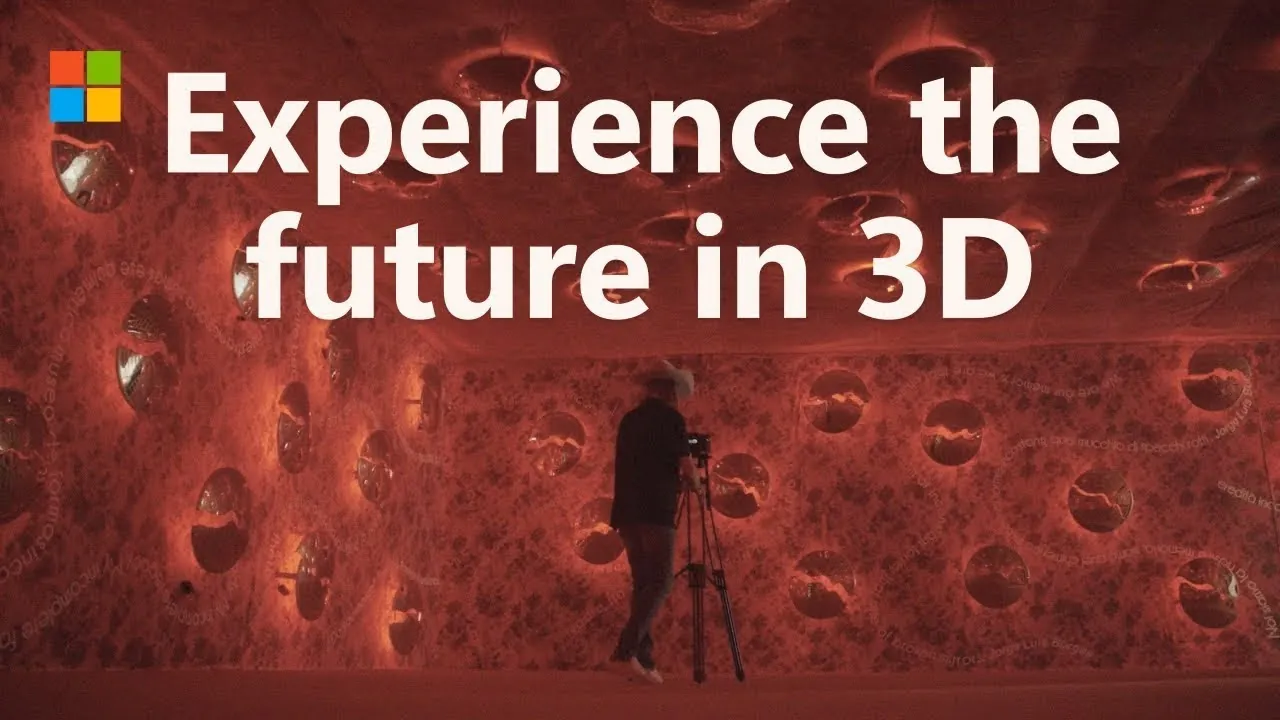
What if the physical world could be captured with such precision that it became indistinguishable from its digital counterpart? This is the bold ambition driving the collaboration between Microsoft Azure, NVIDIA, and Global Objects as they embark on a new mission to create the world’s largest 3D object library. By using innovative technologies like photogrammetry, lidar scanning, and accelerated computing, this initiative aims to digitize real-world objects and environments with unparalleled accuracy. The result? A resource so vast and detailed that it could redefine industries, from entertainment and robotics to cultural preservation. But this isn’t just about building a collection, it’s about transforming how we interact with the digital and physical worlds.
Through this overview, Microsoft explain how this ambitious project is addressing the critical need for high-quality 3D data in AI-driven applications. From allowing autonomous vehicles to navigate complex environments with greater safety to enhancing immersive experiences in virtual and augmented reality, the implications of this library are far-reaching. You’ll also gain insight into the advanced scanning technologies and robust infrastructure, powered by NVIDIA GPUs and Microsoft Azure cloud services, that make this vision possible. As you explore the possibilities, consider how this initiative is not just preserving the world as we know it but also reshaping the future of innovation.
World’s Largest 3D Library
TL;DR Key Takeaways :
- Global Objects, in partnership with Microsoft Azure and NVIDIA, is creating the world’s largest 3D object library to digitize real-world objects and environments with high precision using technologies like photogrammetry, lidar, and advanced GPUs.
- The initiative aims to address limitations in 3D data quality and availability, allowing advancements in industries such as entertainment, robotics, autonomous vehicles, and cultural preservation.
- High-quality 3D data enhances AI systems’ ability to interpret spatial relationships, improving applications like autonomous navigation, robotics, and immersive VR/AR experiences.
- The project uses NVIDIA’s RTX A6000 and H100 GPUs for computational power and Microsoft Azure’s scalable cloud infrastructure for efficient data processing and global accessibility.
- Beyond technological innovation, the initiative has cultural and practical impacts, preserving heritage through digitization and empowering industries with tools for creativity, efficiency, and innovation.
This effort is not merely about creating a repository of 3D models; it is about redefining the standards for digital asset creation. By combining innovative scanning technologies with scalable cloud infrastructure, the project aims to address existing limitations in 3D data availability and quality, unlocking new possibilities for industries ranging from entertainment to cultural preservation.
Why AI Needs High-Quality 3D Data
AI systems rely heavily on accurate and detailed 3D data to interpret and interact with their surroundings effectively. However, current datasets often lack the scale, diversity, and authenticity required for advanced AI applications. This shortfall creates significant challenges for industries such as robotics, autonomous vehicles, and virtual environments, where spatial understanding is critical for success.
By developing a comprehensive library of high-fidelity 3D assets, this initiative directly addresses these limitations. High-quality 3D data allows AI systems to process object details and spatial relationships with greater precision, allowing advancements in areas such as:
- Autonomous Navigation: AI systems can better interpret complex environments, improving the safety and efficiency of autonomous vehicles.
- Robotics: Enhanced spatial data enables robots to perform tasks with greater accuracy and adaptability.
- Virtual Reality (VR) and Augmented Reality (AR): Realistic 3D models enhance immersive experiences, making them more engaging and practical.
This initiative not only supports the development of AI technologies but also ensures that these systems are equipped to operate in increasingly complex and dynamic environments.
How the Digitization Process Works
The creation of a high-fidelity 3D object library requires advanced scanning technologies capable of capturing intricate details with exceptional accuracy. The digitization process incorporates several key methods:
- Photogrammetry: This technique uses high-resolution images to reconstruct detailed 3D models of objects and environments.
- Lidar Scanning: Laser-based technology measures distances with precision, creating accurate spatial maps of complex structures.
- Blue Laser Technology: Designed to capture fine details on reflective or dark surfaces, this method ensures no detail is overlooked.
These methods are powered by NVIDIA’s advanced GPUs, including the RTX A6000 and H100, which provide the computational power necessary to process massive datasets efficiently. Microsoft Azure’s cloud infrastructure complements this by offering scalability and seamless data storage, making sure the vast amounts of data generated during digitization are processed and managed effectively. Together, these technologies enable the creation of a library that is not only comprehensive but also accessible to industries worldwide.
Building The World’s Largest 3D Object Library

Stay informed about the latest in 3D objects by exploring our other resources and articles.
Applications Across Industries
The high-fidelity 3D assets produced by this initiative have far-reaching applications across a diverse range of industries. These assets are not just tools for innovation; they are fantastic options for transformation in how businesses and organizations operate. Key applications include:
- Media and Entertainment: The creation of immersive virtual environments for gaming, film production, and storytelling is enhanced by realistic 3D models.
- Robotics and Training Simulations: Realistic 3D assets provide a foundation for developing advanced training tools and testing environments.
- Real Estate and Retail: Virtual tours and product visualizations allow consumers to explore properties or products in detail, improving decision-making processes.
- Cultural Preservation: Artifacts, historical sites, and cultural landmarks can be digitized, making sure global access and long-term preservation.
These applications demonstrate the versatility and value of the 3D object library, offering solutions that benefit industries, consumers, and society as a whole.
The Role of Technological Infrastructure
The success of this initiative is underpinned by a robust technological infrastructure that combines NVIDIA’s advanced GPUs with Microsoft Azure’s cloud platform. NVIDIA’s RTX A6000 and H100 GPUs provide the computational power needed to process and render complex 3D models, allowing the creation of highly detailed and accurate digital assets. These GPUs are designed to handle the immense computational demands of photogrammetry, lidar scanning, and other digitization techniques.
Microsoft Azure’s cloud infrastructure ensures that the project can scale to meet the demands of a global audience. With capabilities such as global data replication and seamless collaboration across regions, Azure provides the flexibility and reliability required to manage a library of this magnitude. This combination of hardware and cloud technology not only accelerates the digitization process but also ensures the long-term sustainability of the project.
Cultural and Practical Impacts
The creation of the world’s largest 3D object library has profound cultural and practical implications. By digitizing art, artifacts, and historical sites, the project preserves cultural heritage and provide widespread access tos access to these treasures. This ensures that future generations can explore and learn from these assets, regardless of geographic or economic barriers.
In practical terms, the availability of photorealistic 3D assets enables industries to innovate in ways that were previously impossible. For example, electric vehicle manufacturers can use detailed 3D models to develop more effective maintenance and safety training tools. Similarly, architects and designers can use these assets to create more accurate and efficient design processes.
This initiative also fosters creativity by providing creators and businesses with the tools they need to push the boundaries of what is possible in digital content creation. By removing the constraints of traditional production methods, the project enables new forms of expression and innovation.
Looking Ahead: A Vision for the Future
The development of the world’s largest 3D object library represents a significant step forward in bridging the gap between the physical and digital worlds. By providing a foundation for AI-driven applications, this initiative paves the way for advancements in immersive technologies, digital twin creation, and beyond. The ability to replicate real-world objects and environments with precision enhances human understanding and connection, fostering innovation across industries.
This project sets a new standard for 3D modeling, emphasizing authenticity, scalability, and accessibility. By harnessing the combined power of Microsoft Azure and NVIDIA, Global Objects is not only building a library but also shaping the future of AI, immersive technologies, and digital innovation.
Media Credit: Microsoft
Filed Under: Technology News
Latest Geeky Gadgets Deals
Disclosure: Some of our articles include affiliate links. If you buy something through one of these links, Geeky Gadgets may earn an affiliate commission. Learn about our Disclosure Policy.
Credit: Source link