
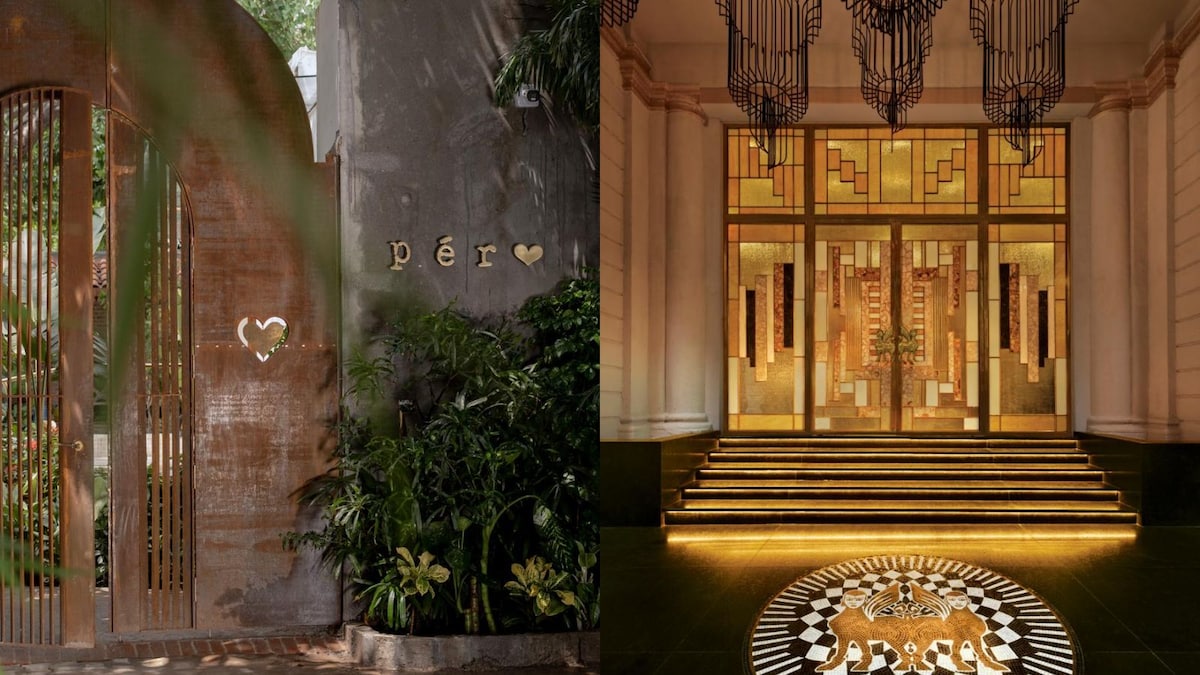
India’s luxury fashion houses are making an expensive bet on physical retail. From Abu Jani Sandeep Khosla’s Mubarak Baug and Sabyasachi’s living museums to Péro and EKÁ, the flagship is evolving from a sales outlet into a brand-building asset. The timing is significant. As e-commerce makes discovery and transactions easier, luxury needs physical spaces to create scarcity, theatre and emotional connection. A store can showcase archives, craftsmanship, art and design in ways a website cannot. More importantly, it allows designers to control the entire customer experience and reinforce the heritage that supports premium pricing.
So, the question is not bricks versus clicks. It is what bricks can do for clicks. For luxury houses, expensive real estate is increasingly an investment in brand equity, customer experience, cultural capital and pricing power, rather than simply another distribution cost.
The shift raises an even bigger business question: why spend on expensive real estate when consumers can buy fashion online? The answer lies in what luxury sells beyond the product. A flagship can turn heritage, craftsmanship, art and architecture into brand equity, create an experience that cannot be replicated on a screen and, ultimately, strengthen the case for premium pricing. For established Indian labels, the store is becoming less a sales channel and more an investment in cultural capital.
Why is Sabyasachi betting big on the business of physical luxury?
In a landscape crowded with online storefronts and infinite choice, the physical store is becoming one of luxury’s most potent forms of differentiation. Sabyasachi Mukherjee’s 26,000-square-foot Delhi flagship in Mehrauli is built around that premise: luxury, he argues, cannot be fully experienced through a screen. Conceived less as a point of sale than as an extension of the Sabyasachi house, the space brings fashion into conversation with art, antiquities, architecture and craftsmanship, making discovery and atmosphere integral to the retail proposition.
There is a clear commercial calculus behind the theatre. As digital commerce makes luxury more accessible, physical immersion can reinforce scarcity, deepen brand equity and support pricing power. Reimagining retail is indeed an art. For him, true luxury loses something when mediated by a screen. According to Vogue Business, museum-like luxury flagships are increasingly serving a dual purpose; attracting international visitors and affluent shoppers who may enter without an immediate purchase intention, while converting high-value clients through private appointments, personalised styling, fittings and couture, bridal and jewellery sales. Sabyasachi’s Mumbai flagship, for instance, includes private lounges and a tea room, turning the store into an immersive, appointment-led environment where experience becomes part of the luxury sale.
Aneeth Arora’s Péro; when fashion finds a physical home
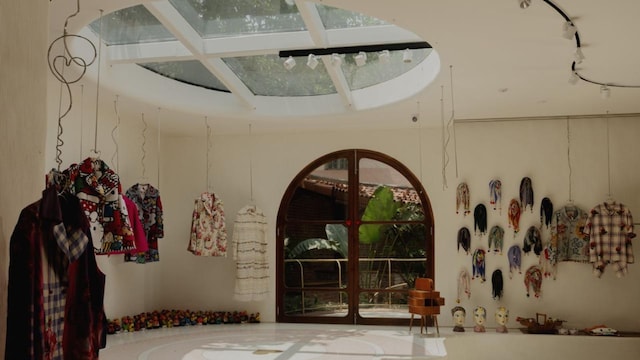
For Aneeth Arora, the founder of Péro, the decision to open a flagship after 17 years was not a retail strategy so much as an instinct. The label had grown slowly, through craft, storytelling and community, without the usual urgency to compete or conform to a timetable. “People have always made the effort to find us,” Arora says. A permanent address, therefore, was never the point until the right one appeared.
That space became pérodise. Arora describes it not as a strategic milestone, but as “a very natural next chapter” for Péro, a place that happened to resonate with the philosophy the label had spent nearly two decades cultivating. But the obvious question is that after 17 years, why did Péro suddenly need to invest in its own retail space? Was the move prompted by a slowdown in export demand, or was the label simply catching up with competitors that had already expanded their retail footprint?
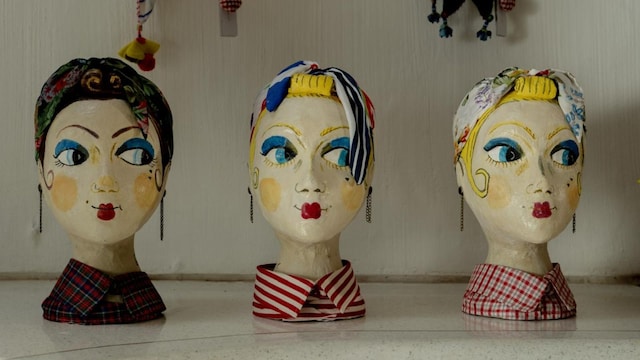
Aneeth Arora, founder of Péro, rejects both interpretations. The brand’s new experiential space, Pérodise, is not a response to weaker demand or a race to expand, but the next step in a business that has grown organically.
Luxury’s real-estate bet
Luxury fashion is spending heavily on physical stores even as e-commerce dominates routine transactions. The business logic is shifting: a flagship is no longer just a sales channel but an investment in brand equity, customer experience and pricing power.
According to MagicBricks, prime retail in Mumbai’s Kala Ghoda commands ₹600–₹1,000 per sq ft a month, versus ₹250–₹400 in Delhi’s Lodhi Colony/Mehar Chand Market. Yet Péro’s new Delhi flagship, Pérodise, was not conceived as a race to expand its retail footprint. “We would not really look at Pérodise as a response to a slowdown or as an attempt to catch up with anyone,” says founder and designer Aneeth Arora. “Pérodise happened because the time and the space felt right.”
Seventeen years into the brand’s journey, Péro had built a business through long-standing retail partners in India and overseas. Owning a store now allows it to control the environment around the product, from merchandising and archives to events and customer engagement.
Pérodise is designed less as a conventional boutique and more as an immersive extension of the label. Stone, brick, wood, terracotta and terrazzo mirror its textiles and craft traditions. Rails can disappear to turn the space into a gallery, while a central podium host talks and presentations. “We see it as a place for cultural exchange,” says Arora.
The commercial equation is still being tested. “We are still understanding what that rent-to-revenue relationship will look like over time,” she says. Pérodise currently draws around 15–20 weekday walk-ins, with higher weekend footfall. The strategy is visible elsewhere too. Abu Jani and Sandeep Khosla’s Mumbai store, Mubarak Baug, designed by A Wonder Room, combines couture, craftsmanship, art and archives in a gallery-like setting.
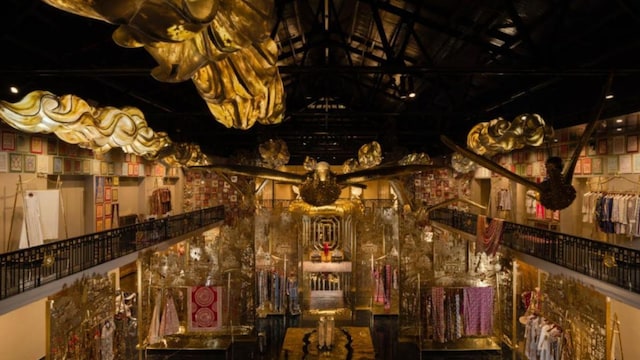
For luxury brands, the physical store is increasingly doing a job e-commerce cannot– creating sensory immersion, emotional connection and perceived value. In that equation, real estate is not merely an overhead. It is becoming part of the brand’s balance sheet.
The craft luxury play
In Mumbai’s Kala Ghoda, EKÁ is turning Indian craftsmanship into a premium fashion proposition. Founded by designer Rina Singh, the brand has spent nearly 15 years building around textiles, artisanal processes and design longevity. Its latest store extends that philosophy into the retail experience, using reclaimed wood, limewashed walls, antique objects and a dramatic handcrafted roof. “We wanted the space to feel lived-in, not designed for fashion retail,” says Singh. “For us, craft is not a trend. It is the foundation of EKÁ.”
These aren’t simply stores designed to maximise daily footfall. They are destination flagships built to attract high-value customers, international visitors and affluent Indian and NRI clients, giving them time, privacy and an immersive brand experience. Péro’s Aneeth Arora puts it simply, “Pérodise was never imagined only around the act of buying something.” It is designed for visitors to “discover Péro, spend time with the craft and the stories” and experience the space through conversations, gatherings and exhibitions. The commercial proposition, then, is not just the transaction, but the time spent inside the brand world.