
Plastics dominate many industries, especially food packaging. They have many good qualities but present downsides that have led to the development of bioplastics. Even with the advantages of these materials, many companies have yet to make the switch. New research done in Virginia Tech’s Department of Chemical Engineering aims to bridge the quality gap between traditional plastics and bioplastics.
Polymers are long chain molecules that consist of hundreds or thousands of smaller molecules called monomers. Many synthetic or man-made polymers are referred to as “plastics”, coming from the Greek word “plastikos”, or good for shaping. Plastics have various uses. Polyvinyl chloride makes pipes and garden hoses, foamed polystyrene makes food containers and polyethylene terephthalate makes beverage bottles. The properties of plastics come from the size of the molecules, the physical state and the arrangement of the polymer chains.
The customizability of plastics makes them ideal for a variety of applications, especially food packaging. Their strength and ability to block the flow of gases make them extremely moldable. They can also be see-through, opaque, flexible or rigid. The most commonly used plastic in food packaging is polyethylene, made of ethylene monomers, which has many variants. Since plastic is versatile, numerous common single-use plastics are mass-produced and global plastic production exceeds 400,000,000 tons annually, according to a recent study from Jan Dlugosz University.
Though convenient, the mass production, use and disposal of plastics cause several issues: pollution, contamination, health risks and rising greenhouse gas emissions. The extensive use of plastics has created what some experts call an “over-reliance” on them.
To combat these negative effects, many innovations with more sustainable plastic materials have been made, referred to as “bioplastics”.
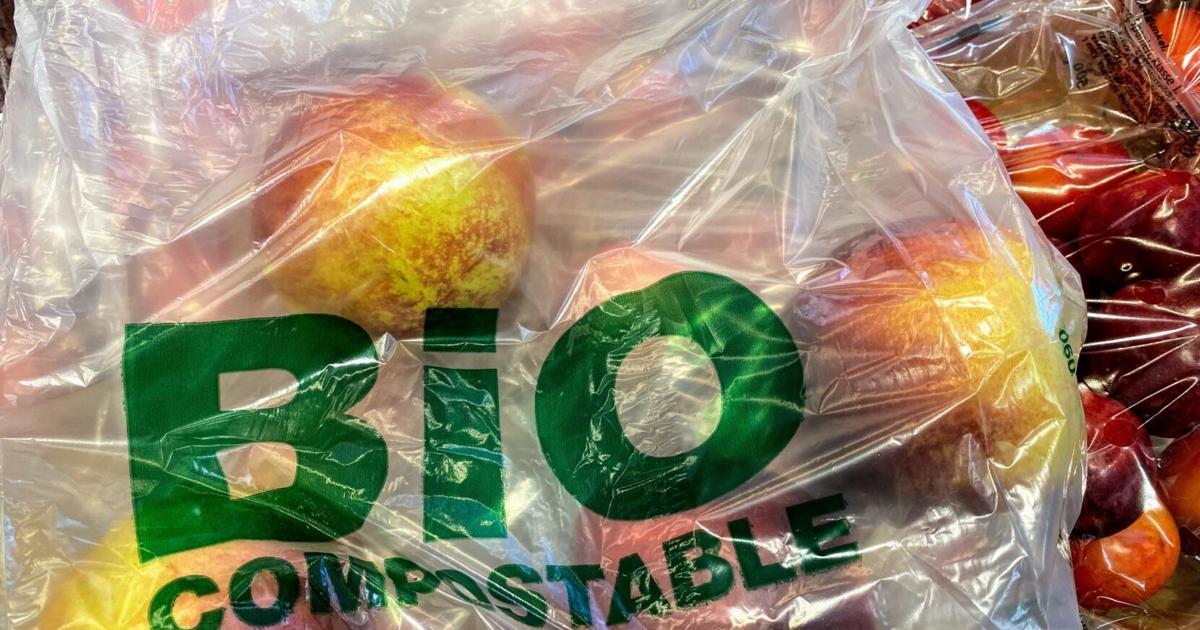
The leading bioplastic material in global production is called polylactic acid, or PLA. It is a thermoplastic polymer, meaning it softens when heated and hardens when cooled, and is sourced from renewable sources like corn and sugarcane. It is biodegradable in industrial compost facilities, resistant to moisture, relatively durable and safe for human contact.
Still, with innovation in bioplastics happening globally, there is widespread reluctance to make the switch. Bioplastics can be more expensive to manufacture than plastics derived from fossil fuels, and require industrial conditions to break down that are not widely available yet. Additionally, since they are still in development, the effectiveness of bioplastics like PLA is less consistent compared to more popular materials like polyethylene.
However, research led by associate professor of chemical engineering Rong Tong, in collaboration with assistant professor of food science and technology Yifan Cheng, addresses this issue.
With Ph.D. students Ziyu Huo, Xiaoyu Xie and Huida Duan, the research team altered plastic’s molecular architecture. They controlled both the shape and the sequence of the polymer, making the chains into rings and changing the sequence of the molecules to form a gradient polymer, or a polymer whose monomer composition changes gradually along the length of the polymer chain.
This engineering allowed for many positive characteristics of plastics to exist within one plastic.
“For decades, developing better plastics has largely focused on changing what they’re made of,” Cheng said to Virginia Tech news. “Our work suggests that how the molecules are arranged, whether as lines or circles, can be just as important.”
Several of the polymers the team worked with exhibited properties similar to those of PLA, matching its oxygen-blocking ability while being more ductile and tougher.
“Usually, when you improve the strength of a material, you have to make some sacrifices — the material could become more brittle, for example,” Tong said. “But here, we see both the strength and the toughness improve together. That shows us that the ring-shaped structure and the controlled arrangement work together in a way we haven’t seen in previous approaches.”
Research like Tong and Cheng’s suggests that changing the molecular structure of these polymers could help address their limitations and make bioplastics a suitable substitute for conventional plastics.